
What Day 1 Ready Means on an Embedded Firmware Bring-Up Contract
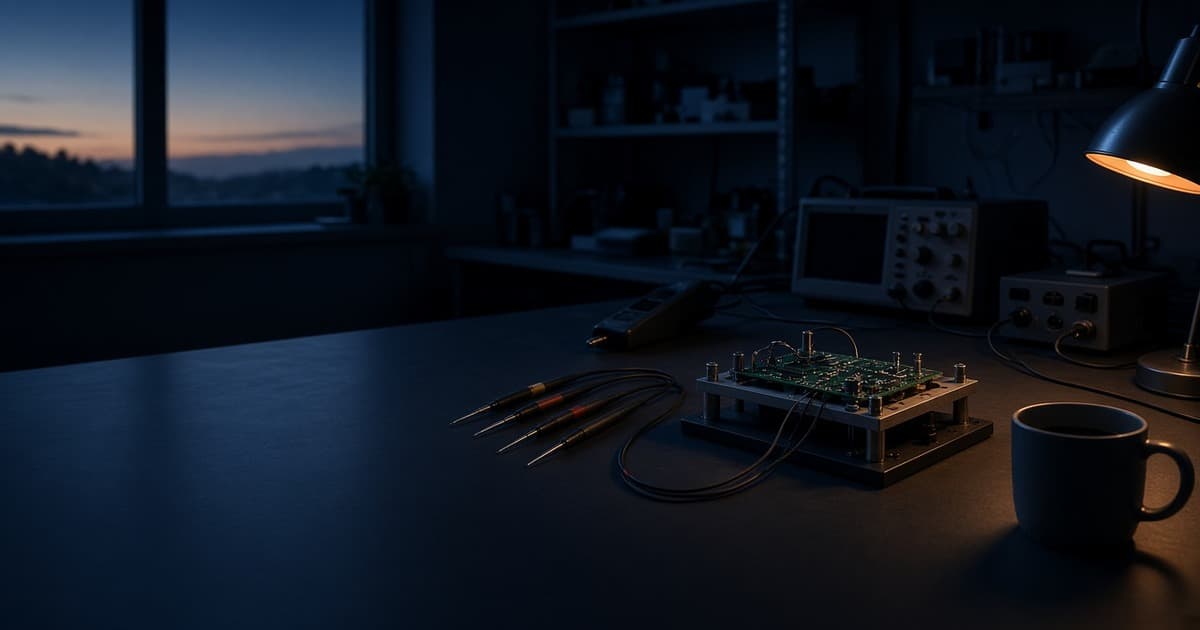
Bring-up contracts fail when Day 1 means "figure it out later." Ask about board access, boot scope, and domain honesty before you sign.
Some partners say Day 1 ready and mean you can find the wiki. Others mean you can attach a probe, find the hung boot path, and start earning the rate on the board sitting in front of you.
If you are a senior or principal embedded firmware engineer looking at contract bring-up seats, those two Day 1 definitions are the whole conversation.
Bring-Up Is Where Generalist Staffing Language Falls Apart
Board bring-up, boot, drivers, and RTOS integration is clocks and resets misbehaving, a bootloader that hangs on a memory controller you have not seen before, a driver that looks fine in simulation and fails when the real PHY is attached. One RTOS principal's standing complaint is deterministic scheduling and inter-task discipline when the product cannot miss a deadline. Linux-based embedded peers get equally particular about device trees, kernel edges, and a root filesystem that survives the product's power policy. Lab time is often the job.
Firmware engineers get blunt about this. A partner who only speaks in "C/C++ on microcontrollers" is still learning how to represent you into a bring-up seat. You should hear questions about boot strategy, HAL boundaries, which peripherals are already up, whether the hardware is stable enough for driver work, and how much of the first week is scope versus archaeology.
A recruiter who cannot talk bring-up… is your cue to leave. That is how you protect a contract that was supposed to use what you already know how to ship.
Day 1 Ready vs a Long Ramp
Day 1 ready on a bring-up contract means you can contribute against the actual board, boot path, driver set, or RTOS integration without needing a quarter to learn the team's vocabulary. A long ramp means the seat was written for a generalist title and the real work shows up later as surprise ownership.
Hiring managers use "shipped firmware" carefully when they mean it. In automotive, they often mean safety process, MISRA discipline, ISO 26262 context, and a bring-up story that survived vehicle or HIL reality. In aerospace and defense, they mean assurance-level thinking around DO-178C and a lab culture that treats probes as part of the work. In networking and compute-adjacent embedded, they mean drivers and boot paths that survive high-throughput hardware beyond a demo blinky that impressed a screener.
Same title family, different Day 1.
What You Should Ask Before You Accept
Peer to peer, these are the questions that save contracts:
What is the actual first-week scope: boot, a specific driver, RTOS integration, power policy, or "whatever is broken on the board"?
Do you get lab access early, or is the first stretch simulation and documentation while hardware is still in transit?
Is the rate honest for the seniority and domain, or is the req priced for a mid-level title while describing principal ownership?
Does the domain match what you have shipped, or are they hoping auto experience magically becomes aero bring-up (or the reverse)?
You are allowed to walk when the answers are vague. The best partners expect that. The bring-up contracts open right now show whether any of this matches what you have shipped. We would rather lose a mismatched conversation early than put you in a seat that wastes your name and the hiring manager's calendar.
Lab vs Sim Is a Seat Definition
Some contracts are mostly model and testbench until silicon or boards arrive. Bring-up contracts live on the board. Senior engineers want to know, on day zero, how much of the first stretch is real hardware. Logic analyzers, scopes, JTAG or SWD access, and whether the schematic owner is available when reset misbehaves are how you tell a bring-up seat from a documentation seat wearing a firmware title.
If a partner shrugs at lab access questions, believe them. They are telling you what the first month will feel like.
Domain Honesty Beats Flattering Keywords
ISO 26262 on a resume and DO-178C are different assurance worlds. Networking driver work and motor control are different product problems. Hiring managers get specific when they care: which RTOS, which boot chain, which peripherals, which lab reality. You should get specific back. A contract that flatters your breadth while needing someone else's depth is how Day 90 ramps get invented after the fact.
When you are ready, be findable for the next bring-up contract that actually matches your stack.
FAQ
Frequently Asked Questions
What Should I Ask Before Accepting an Embedded Firmware Bring-Up Contract?
Ask about first-week scope, lab access, rate honesty for the seniority, and whether the domain matches what you have actually shipped. Vague answers are a signal.
How Is Day 1 Ready Different From a Long Ramp on Firmware Seats?
Day 1 ready means you can contribute against the real board, boot path, drivers, or RTOS work without spending a quarter learning the team's vocabulary. A long ramp usually means the seat was written for a soft title and the real ownership showed up late.

Written by
Jason Eisenberg
Head of Marketing